
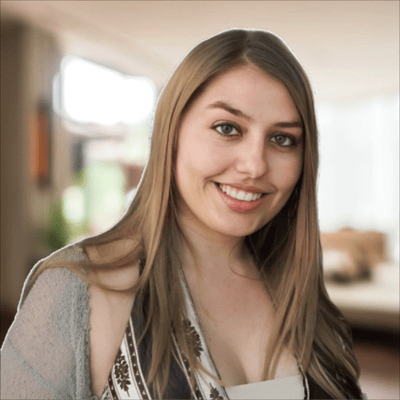
Julia Sánchez Tormo
PhD in Clinical and Medical Biochemistry and Immunology · Biostatistics and data science
Who I am
I always wanted to study chemistry and work in health research. As a child, I dreamt of finding cures for all kinds of diseases and improving people's lives.
I graduated in chemistry and did my PhD in the Clinical and Medical Biochemistry and Immunology programme at the Universitat de València, with a thesis on the role of glutathione in cancer cells. For years I researched the biochemical mechanisms of cancer and cardiovascular disease in the lab, looking for markers that would allow earlier and more accurate diagnosis.
I loved working in the lab, but because of my spinal muscular atrophy, parts of the experimental work were becoming harder and harder for me to do. If a neurodegenerative disease teaches you anything, it is to be persistent in everything you set out to do, to look for the best way to face each challenge and never to give up.
By the time I finished my PhD, I had been thinking about training in biostatistics for a while. It was a field that interested me and that let me keep adding value to research from a different angle. I decided to do the Master's degree in Bioinformatics and Biostatistics, and there I found a new passion. I did internships at a couple of healthcare institutions, got my first jobs as a biostatistician and kept training in data science, statistical modelling, machine learning, data visualisation, data storytelling and scientific infographics.
After several years of taking on projects mainly through recommendations, in 2025 I co-founded Azahar Data Insights with Rubén. Creating Azahar was my way of bringing together everything I had found along the way and of continuing to pursue what had driven me since I was a child: that my work should help improve people's health and lives.
Education
Official degrees in chemistry, biochemistry and biostatistics, plus ongoing training in applied data science.
PhD in Clinical and Medical Biochemistry and Immunology
Master's degree in Bioinformatics and Biostatistics
Degree in Chemistry (Licenciatura)
Further training
Teaching and academic activity
Lecturer on the course «Cómo realizar un meta-análisis utilizando R: un enfoque práctico paso a paso» (How to carry out a meta-analysis in R: a practical, step-by-step approach; FINUT, 2024).
Peer reviewer of scientific articles for the journal Medicina y Seguridad del Trabajo (2021 and 2023).
Co-author of the book Mente, Cuerpo y Enfermedad (Brúfol, 2016).
A good analysis starts with understanding the question, the biological context and what the people behind the data need to decide.
Azahar's work